All dishes / Southeast Asia
Adobo (Philippine adobo) Period BOrigin theory CVerified
Some fields (dish name, region and gates) are shown from the Japanese-edition data.
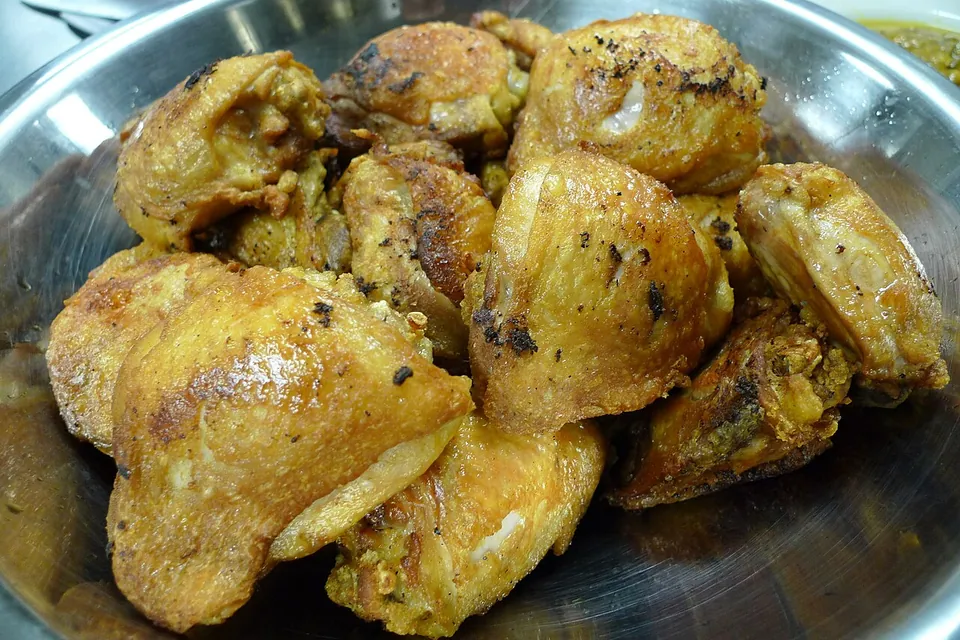
Adobo, chicken or pork braised with vinegar and garlic, is a home-cooked dish of the Philippines. Its name clearly comes from the Spanish word for "to marinate," but whether this way of cooking in vinegar was already on the islands before the Spanish arrived, or came with them, cannot be settled from the sources we have today.
Verification highlight popular claim → verdict → evidence
Myth: Antonio Pigafetta, the chronicler of Magellan's expedition, recorded 'adobo de los naturales' in 1521. Verdict: rejected — the phrase first appears in Pedro de San Buenaventura's Vocabulario de la lengua tagala of 1613, and the word adobo does not occur in Pigafetta's voyage account, so the story mixes up two dates nearly a century apart. The name comes from the Spanish adobar, 'to marinate'. Whether braising in vinegar was on the islands before the Spanish came or was brought by them cannot be settled from the sources available: encyclopedias describe it as a local technique but cite no record from before contact, while the abstract of a 2005 paper on Philippine culinary history says the Spanish introduced adobo to the Philippines. Key sources: Felice Prudente Sta. Maria, 'GAMBILÀ: A Preliminary Framework for the Study of Philippine Culinary History' (The Journal of History, 2005); Britannica; reference accounts of the 1613 Vocabulario de la lengua tagala.
The three gates
- Ingredient-supply gate
- The vinegar at the heart of the dish is made from coconut, sugarcane or palm. Braising in vinegar and salt is widely said to have existed on the islands before Spanish contact, but no record from before contact has been put forward to show it. Soy sauce came in later through Chinese trade, and the adobo recipe used in schools in 1922 did not include it. The dish depends on no New World ingredient.
- Cooking-technique gate
- The meat is braised in vinegar, a way of cooking that also helps it keep.
- Venue gate
- Cooked at home, it was everyday food for ordinary people, and it belonged to the local communities of the islands.
Overview
A home dish braised in vinegar
Adobo is a home-cooked dish of Luzon in the Philippines: chicken or pork braised with vinegar, garlic and black pepper. The vinegar is made from coconut, sugarcane, nipa palm or kaong palm, and its sharpness carries the flavor of the braising liquid. Meat cooked this way keeps well, and adobo has become everyday food on the tables of ordinary households across the islands.
The name comes from the Spanish adobar, "to marinate" or "to pickle." Its earliest written appearance is generally placed in a Tagalog dictionary published in 1613, during the Spanish colonial period.
Soy sauce came later
Adobo today is often darkened and rounded out with soy sauce, but the soy sauce arrived later, through trade with the Chinese. The adobo recipe used in schools across the Philippines in 1922 still left it out. By 1958 at the latest, soy sauce was among the ingredients of adobo in Manila.
How we know
A widely repeated account of adobo goes like this. Braising meat or fish in vinegar and salt so that it would keep was already practised in the Philippines before Spain began colonizing the islands in 1565, and the Spanish who came later simply gave a local dish a name in their own language. Encyclopedias tell it the same way. Yet these accounts do not cite any record from the time showing that vinegar braises were being cooked on the islands before the Spanish came.
The first clue to the name is a phrase in the Tagalog dictionary of 1613: adobo de los naturales, "the adobo of the natives." The words "of the natives" make it sound like a reference to the local people's own braised dish. But it is not clear that the phrase meant a vinegar braise at all. In the 1794 edition of the same dictionary, it is given as the equivalent of the word for kinilaw, raw fish or meat cured in vinegar. The "adobo of the natives" of 1613 cannot be assumed to be the same dish as adobo today.
There is also a statement pointing the other way. A 2005 paper on Philippine culinary history says in its abstract: "The Spanish introduced adobo into their New World colonies and the Philippines. Vinegar is what made it adobo." That reverses the story of Spaniards putting a name to a dish they found already cooking on the islands.
The age of the name has also attracted a popular error. Some articles claim that Pigafetta, the chronicler who sailed with Magellan's expedition, wrote down "adobo de los naturales" when he reached the islands in 1521. But the word adobo does not appear in Pigafetta's account of the voyage. The phrase first appears in writing in the 1613 dictionary; the story mixes up the voyage of 1521 with a dictionary published nearly a century later.
Some questions about adobo have answers, and some do not. That the name comes from Spanish, and that soy sauce was added later, is clear. Whether braising in vinegar was already in island kitchens before the Spanish arrived, or was something they brought with them, cannot be decided from the sources we have today.
The full set of origin theories and the detailed verification log — traceable all the way to their sources — are available on the Japanese edition.
See the full origin theories and verification log (Japanese) →