All dishes / North America
Brownie Period BOrigin theory DVerified
Some fields (dish name, region and gates) are shown from the Japanese-edition data.
The brownie is a dense, fudgy chocolate square. For the oft-repeated story that Chicago's Palmer House Hotel invented it for the 1893 World's Fair, not a single piece of support from the time has been found.
Verification highlight popular claim → verdict → evidence
Popular claim: Chicago's Palmer House Hotel created the brownie at Bertha Palmer's request for the 1893 World's Columbian Exposition. Verdict: no support from the time -- a publication from 1893 that calls a Palmer House sweet a 'brownie' has yet to be found, and the account is best read as an invented tradition. The name came from the sprites of Palmer Cox's illustrated book (1887) and was attached to several different products before a chocolate version took shape: Fannie Farmer's 1896 'Brownies' were molasses-and-pecan cakes, and the 1897 Sears catalog lists 'Brownies' among crackers and biscuits without saying what they were. The first record joining the name to chocolate is a confectioner's advertisement for 'Chocolate Brownies' in the Kansas City Star (March 1898). An 1899 Chicago cookbook printed a 'Brownie cake', a chocolate cake made without baking powder, which the pastry writer Stella Parks counts as the earliest forerunner of today's brownie; chocolate brownies then turn up separately in the Boston Daily Globe (1905) and the revised Fannie Farmer cookbook (1906). The 1899 'Brownie's Food' from Machias, Maine, is a frosted layer cake, a different sweet. No single person or shop can be credited, and the origin remains undetermined. Key sources: Barry Popik's word-history notes; the Machias Cook Book (1899); Mental Floss.
The three gates
- Ingredient-supply gate
- Cocoa itself is native to the New World, but confectionery-grade solid chocolate only became available after 19th-century Western manufacturing was established. The limiting factor was access to that processing-grade chocolate.
- Cooking-technique gate
- Oven baking, with a dense, low-flour dessert formulation.
- Venue gate
- City confectioners' advertisements (a Kansas City newspaper, 1898) and recipes printed in newspapers and cookbooks (a Chicago cookbook, 1899; a Boston newspaper, 1905; Fannie Farmer's cookbook, 1906).
Overview
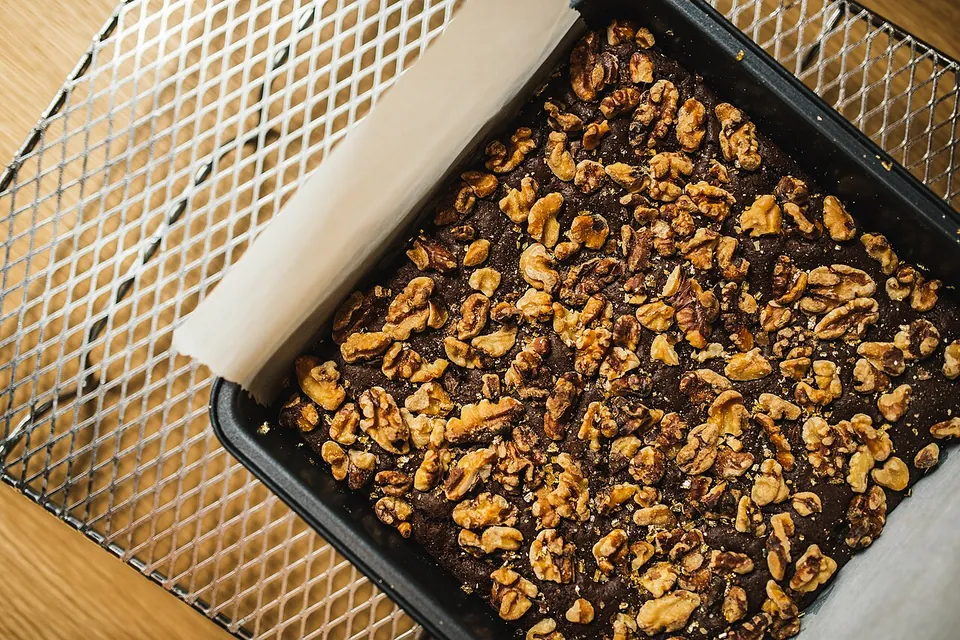
A brownie is a dense, moist square baked from chocolate, butter, sugar, and eggs with only a little flour. It is heavier than cake, and the sparing use of wheat gives it a close, fudgy bite. It became a mainstay of American home baking and remains one of the standard baked treats today.
Chocolate carries the dish. Cacao itself had long been a New World crop, but the solid baking chocolate that can be worked into a batter did not reach American and European markets until processing methods were worked out in the nineteenth century. Once that kind of chocolate was on hand, bakers could build a rich sweet with chocolate at the front.
Chocolate brownies turn up separately in American newspapers and cookbooks in the late nineteenth and early twentieth centuries. In March 1898 a confectioner's advertisement in the Kansas City Star offered 'Chocolate Brownies.' The following year a Chicago cookbook printed a 'Brownie cake,' a chocolate cake made without baking powder, which the pastry writer Stella Parks counts as the earliest forerunner of today's brownie. By 1904, recipes close to the modern proportions are said to have appeared in newspapers and cookbooks in Chicago and the northeastern United States as well. The 'Bangor Brownies' printed in the Boston Daily Globe in April 1905 combine butter, eggs, sugar, melted chocolate, and walnuts with half a cup of flour; the batter is spread thin, baked, and cut before it cools. It is an early printed recipe that clearly shows the brownie in its present form. In 1906 the revised edition of Fannie Farmer's Boston Cooking-School Cook Book included a brownie made with Baker's chocolate. Where the sweet appears in the record, it is in city confectioners' advertisements and in recipes printed in newspapers and cookbooks.
How we know
The origin story told most often for the brownie belongs to Chicago's Palmer House Hotel. The hotel's own account says the dessert was created there at Bertha Palmer's request for the 1893 World's Columbian Exposition.
But no support for the story from its own time has come to light. A publication from 1893 that calls a Palmer House sweet a 'brownie' has yet to be found. The name first belonged to the little sprites of Palmer Cox's illustrated book The Brownies: Their Book (1887), and as they became a craze in the 1890s the word was attached to several different products before any chocolate version had taken shape. The 'Brownies' in Fannie Farmer's 1896 cookbook were small molasses-and-pecan cakes with no chocolate in them. The 1897 Sears mail-order catalog lists 'Brownies' in one-pound packets among its crackers and biscuits, without saying what they were; reading them as a chocolate candy is the interpretation of a later encyclopedia of American food. The first record that joins the name to chocolate is a confectioner's advertisement for 'Chocolate Brownies' in the Kansas City Star in March 1898. Even after that, the name did not settle on a single sweet. The 'Brownie's Food' in a cookbook published in Machias, Maine, in 1899 does use chocolate, but it is a layer cake raised with baking soda and spread with a cream frosting, a different sweet from today's brownie. The Palmer House account is best understood as an invented tradition, tidied into shape after the fact.
So who made the first one? Chocolate brownies appear separately, within less than a decade, in publications from places far apart: a Kansas City confectioner's advertisement, a Chicago cookbook, a Boston newspaper. By 1904, recipes close to the modern proportions were appearing one after another in newspapers in Chicago and the northeastern United States. From how widely those recipes spread and how close together they came, Stella Parks is reported to infer a common source recipe that left no record of its own. The brownie cannot be credited to any one person or shop, and who baked the first one is still undetermined.
The full set of origin theories and the detailed verification log — traceable all the way to their sources — are available on the Japanese edition.
See the full origin theories and verification log (Japanese) →