All dishes / East Asia
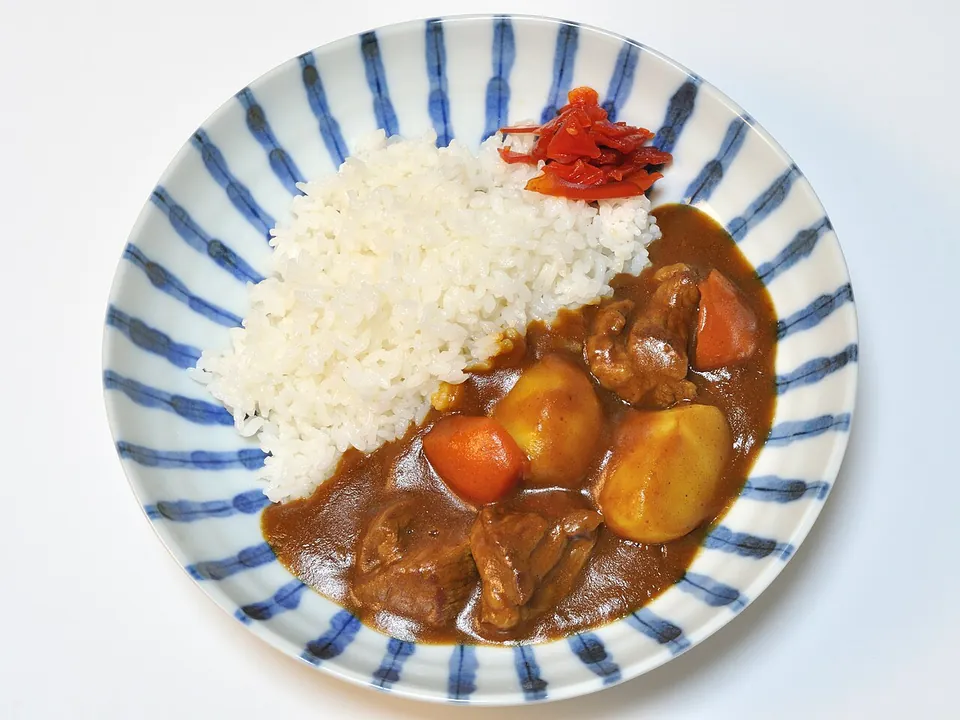
Japanese curry rice Period BOrigin theory BVerified
Some fields (dish name, region and gates) are shown from the Japanese-edition data.
Japanese curry rice is often said to have been created by the Imperial Japanese Navy, which learned curry from the British Royal Navy, reworked it to be poured over rice, and spread it across the country, with the naval surgeon Takaki Kanehiro adding it to the sailors' diet to fight beriberi. Yet curry served with rice, and curry thickened with flour, both appear in civilian cookbooks of 1872, and no record has yet been found showing that the navy was where the dish began.
Verification highlight popular claim → verdict → evidence
Curry came to Japan by way of Britain, where Indian cooking had become a stew seasoned with curry powder. Recipes for curry appear in Japanese print as early as 1872, in two cookbooks: one thickens the curry with wheat flour, and the other, according to a British Library curator's account, serves it with rice. In the navy, curry appears in an 1889 Navy Ministry directive that lists how to make "raisu karei" among the subjects on which its cooks were examined, and the 1908 Naval Cookery Reference gives a recipe poured over rice. No record has yet been found to support the familiar story that the Japanese Navy learned curry from the British Royal Navy, reworked it for rice, and spread it across the country; a researcher of naval cooking suggests the navy adopted a dish that had already spread among the public. The naval surgeon Takaki Kanehiro did reform the navy's diet against beriberi, but no record has yet been found linking him to curry, and none rules the link out either. Who added curry to the navy's menu, and why, is still unknown.
The three gates
- Ingredient-supply gate
- Curry powder (imported; the first made in Japan is said to date from 1905)
- Cooking-technique gate
- A curry-powder stew thickened with wheat flour and served with rice (both already appear in cookbooks of 1872)
- Venue gate
- Western cookbooks / common people
Overview
Japanese curry rice grew out of curry as Britain had remade it. In Britain, Indian cooking had turned into a stew seasoned with ready-blended curry powder, and it was this British-style curry that entered Japan through the newly opened treaty ports in the last years of the shogunate and the early Meiji period. Curry powder long remained an import; the first made in Japan is said to have been Yamatoya's, in 1905 (Meiji 38).
Recipes for curry appear in Japanese print in 1872 (Meiji 5), in two cookbooks published that year. The Seiyo Ryori Shinan, by an author writing as Keigakudo Shujin, has the cook chop scallion, ginger, and garlic, fry them in butter, add water, and simmer chicken, shrimp, sea bream, oysters, red frog, or the like; curry powder goes in next, and wheat flour dissolved in water thickens the stew at the end. The cook picks the main ingredients from that list, and rice does not appear in this entry. The other book, Kanagaki Robun's Seiyo Ryori Tsu, was based on the notes of an Englishman living in Yokohama, and according to a British Library curator's account it describes a curry of veal or chicken served with rice. The year 1872 marks an early appearance in writing, not the year the dish was born.
Curry turns up in the navy's records later. In 1889 (Meiji 22) the Navy Ministry set out the skills on which enlisted men were to be examined, and among the subjects for the navy's cooks it listed how to make "raisu karei." In 1908 (Meiji 41) the Maizuru naval corps compiled the Kaigun Kappojutsu Sankosho (Naval Cookery Reference), which gives a recipe for "karei raisu": beef or chicken, carrot, onion, and potato are diced and simmered; wheat flour is browned in beef tallow, curry powder is added, and the mixture is thinned with stock; the stew is then poured over rice cooked in stock and served with chutney. The book notes that it drew on a reference work compiled by the Sasebo naval corps.
How we know
The story most often told about Japanese curry rice is a navy story. The Imperial Japanese Navy learned curry from the British Royal Navy, thickened it with flour so it would sit well on rice, and carried it across the country. On top of that sits a second tale: that the naval surgeon Takaki Kanehiro brought curry into the sailors' diet as part of his reforms against beriberi.
That the navy cooked curry is clear from the 1889 Navy Ministry directive and the 1908 Naval Cookery Reference. But the heart of the story, that the navy turned curry into a thick sauce for rice, does not fit the dates. Curry served with rice and curry thickened with flour are both already in civilian cookbooks of 1872, seventeen years before the navy's 1889 record. Takamori Naofumi, a researcher of Japanese naval cooking, says there is no record of when the navy took up curry and no evidence that the navy was the source of Japanese-style curry; he suggests the navy adopted a dish that had already spread among the public. That curry reached Japan by way of Britain can be read from the Seiyo Ryori Tsu, built on an Englishman's notes in Yokohama. No record has yet been found, though, to support the idea that it came through the Royal Navy, or that it spread from the navy into homes around the country.
The Takaki story runs out in the same way. Takaki did reform the navy's diet, moving it away from white rice toward barley rice and Western food; that much is history. But no contemporary record has yet been found showing that he introduced curry as part of that reform, and a footnote in the Japanese Wikipedia article on Takaki says the claim has no stated basis or source and that it is unclear whether it is true. The 1889 directive simply names the subject, and neither the curry entry in the 1908 reference nor its preface and account of its compilation mention Takaki or beriberi. No record yet links Takaki to curry, and none rules the link out either.
What is certain is that curry came to Japan by way of Britain in the early Meiji years, that a cookbook of 1872, the Seiyo Ryori Tsu, already paired it with rice, and that by 1889 it was a subject on which the navy examined its cooks. Who added curry to the navy's menu, and why, is still unknown.
The full set of origin theories and the detailed verification log — traceable all the way to their sources — are available on the Japanese edition.
See the full origin theories and verification log (Japanese) →