All dishes / East Asia
Mapo tofu Period AOrigin theory CVerified
Some fields (dish name, region and gates) are shown from the Japanese-edition data.
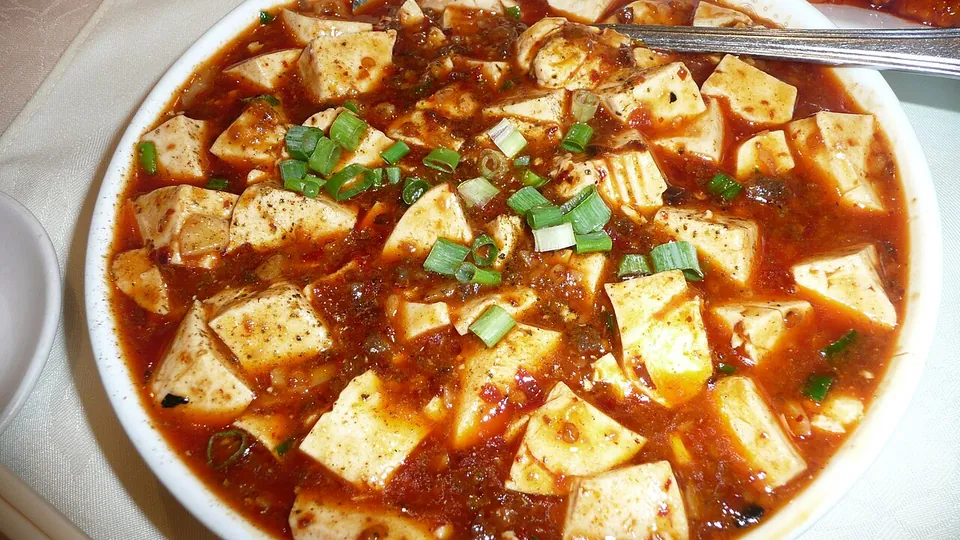
Tofu cooked with beef, chili, and Sichuan pepper: a famous dish of Chengdu, in Sichuan. The tale that its name comes from a pockmarked proprietress took shape in later retellings, but three records of quite different kinds point to the same thing: in late-Qing Chengdu, the tofu at Chen Mapo's shop was known as a local specialty.
Verification highlight popular claim → verdict → evidence
Popular claim (common in Japan): chef Chen Kenmin, father of "Iron Chef" Chen Kenichi, invented mapo tofu. Verdict: refuted. Chen Kenmin opened his Tokyo restaurant in 1958 and adapted the dish to Japanese tastes, popularizing it there, but the dish goes back about a century earlier, to late-Qing Chengdu. Fu Chongju's Chengdu tonglan (1909) lists "Chen Mapo's tofu" among the city's famous food shops, so by that year at the latest it was known as a local specialty; Zhou Xun's Furong huajiu lu, which set down the customs of late-Qing Chengdu years later, places a Chen Mapo skilled at cooking tofu outside the North Gate; and Feng Jiaji's zhuzhici verses set the dish beside Wanfu Bridge. The shop's own tradition dates its opening to 1862, while the story of the name and the anecdotes about its proprietress were shaped in later retellings, so no single person can be settled on as the dish's originator. Key sources: Fu Chongju, Chengdu tonglan (1909); Zhou Xun, Furong huajiu lu; Feng Jiaji, Jincheng zhuzhici bai yong.
The three gates
- Ingredient-supply gate
- Tofu plus chili pepper (Sichuan's spicy-numbing style postdates the Ming-Qing transition)
- Cooking-technique gate
- (none recorded)
- Venue gate
- Chengdu eateries
Overview
Mapo tofu (mápó dòufu) is a Sichuan dish built on tofu and seasoned with beef, chili, and Sichuan pepper. It took shape in Chengdu in the second half of the nineteenth century, during the last decades of the Qing dynasty. At its heart is the layering of two sensations: là, the sting of chili on the tongue, and má, the tingling numbness of Sichuan pepper.
Tofu, the main ingredient, has been part of Chinese cooking since ancient times. To it was added the chile, a plant native to the New World, which reached Sichuan in the mid-eighteenth century: it first appears in a Sichuan local gazetteer in 1749, and its arrival by way of Hunan goes back to 1684. Over the hundred-odd years that followed, chili-hot seasoning spread across Sichuan tables.
The shop is said to have stood outside Chengdu's North Gate, at the foot of Wanfu Bridge. According to the shop's own tradition it opened in the first year of the Tongzhi reign (1862), and the tofu dish made by the proprietress, Chen Liu, won it a following. Served in an ordinary city eatery, the dish became known as one of the specialties of late-Qing Chengdu.
How we know
A woman with a pockmarked face (má) named Chen Liu made it at her shop by Wanfu Bridge in Chengdu in the first year of the Tongzhi reign (1862), and so it came to be called Chen Mapo tofu, the tofu of pockmarked old Mrs. Chen. A story like this follows the name of mapo tofu wherever it goes. How much of it is history?
Zhou Xun's Fúróng huàjiù lù, which set down the customs of late-Qing Chengdu, says that outside the city's North Gate there was a Chen Mapo who was skilled at cooking tofu. Fu Chongju's Chéngdū tōnglǎn (1909) has a passage listing Chengdu's famous food shops by name and specialty, and there, between "the roast duck of Bianyifang" and "the shuifen noodles of Guanyin Pavilion at Qingshi Bridge," it names "Chen Mapo's tofu." By that year at the latest, Chen Mapo's tofu was known as a Chengdu specialty. Feng Jiaji's Jǐnchéng zhúzhīcí bǎi yǒng, a collection of zhuzhici verses on the sights and ways of Chengdu, includes the lines "Mapo tofu still carries its name... by Wanfu Bridge the curtain shadows stir," setting the dish's name in a scene beside Wanfu Bridge. A record of customs, a list of famous shops, and a poem: three sources of quite different kinds all point to late-Qing Chengdu, and of the three it is the poem that names Wanfu Bridge as the place. That the tofu at Chen Mapo's shop had won a reputation in late-Qing Chengdu can be stated with confidence.
What deserves to be read with some caution are the details that color the telling. The account of the name, that customers jokingly called the pockmarked proprietress by it, and the episode in which porters carrying loads brought their own oil and meat to the shop, are tellings shaped in later shop lore and local gazetteers, and contemporary records have little to say about them. That a famous shop existed is one matter; whether the anecdotes about its owner are true is another. Chen Mapo, as a single person, cannot be settled on as the dish's originator.
In Japan there is also a story that mistakes Chen Jianmin, the chef who made mapo tofu popular there, for its creator. Chen Jianmin opened Shisen Hanten in Tokyo in 1958 and adapted the dish to Japanese tastes, holding back on Sichuan pepper and softening the heat. He reshaped the dish; he did not create it. Mapo tofu in its original form goes back to Chengdu, some hundred years before Shisen Hanten opened.
The full set of origin theories and the detailed verification log — traceable all the way to their sources — are available on the Japanese edition.
See the full origin theories and verification log (Japanese) →
Related dishes
Shares the key ingredient
- KimchiSouth KoreaC
- Doro watEthiopian HighlandsB
- Indigenous molli (chilmolli chili sauce, before Old World spices)MexicoB
- RendangMinangkabau, West Sumatra (Indonesia)C
- Tom yum goongThailandC
- SambalMalay Archipelago (Indonesia)C
- TteokbokkiKorean PeninsulaC
- Tandoori chickenNorth India (Punjab / Delhi)B
- LaksaPenang (Straits Settlements)C
- MuhammaraAleppo, SyriaC
- VindalooGoa (India)C
- Piri piri chickenMozambique (Portuguese colonial sphere)C
- HarissaTunisiaC
- BibimbapSouth KoreaC
- Twice-cooked pork (huiguorou)Sichuan (China)C
- LarbLaos / Isan (Thailand)C
- Chili con carneTexas, USA (San Antonio)C
- Dan dan noodlesChengdu, Sichuan (China)C
- General Tso's chickenNew York (USA)C
- Pol sambolSri LankaB
- Chapli kebabPeshawar (Pakistan)C
- ShiroEthiopian HighlandsB
- Hiroshima soupless dandan noodlesHiroshima (Japan)B
- Kung pao chickenSichuan (China)C
- Fuqi feipianSichuan (China)D
- Nasi lemakMalaysiaC
- LampraisSri LankaC
- Nigerian pepper soupNigeria (West Africa)C
- MerguezMoroccoB